
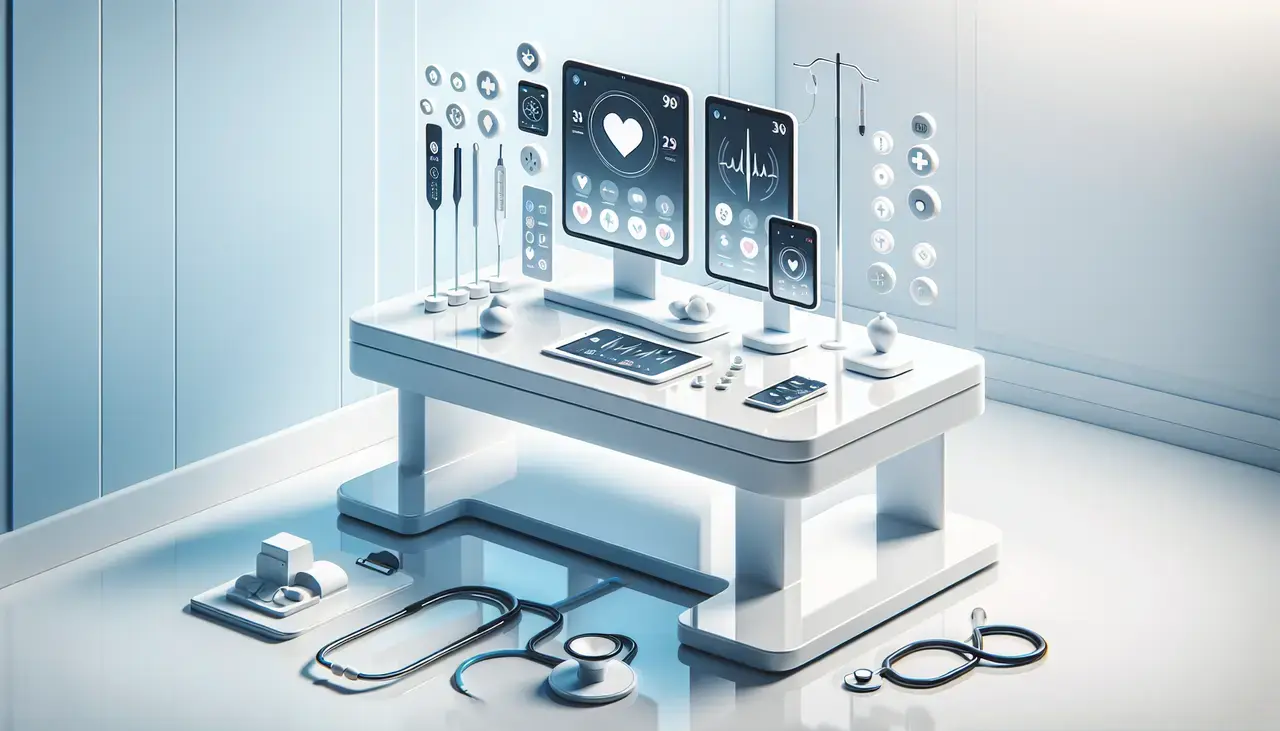
Let’s Talk About Medical Tablet Stands
Medical tablet stands are the unsung heroes of clinics and hospitals. Simple yet essential, they hold tablets where professionals need them most. Quick setup, easy access—that’s their mission. From patient rooms to operating theaters, these stands are reliable, ready, and built to perform.
Picture this: you’re a doctor or nurse on a busy day, juggling patient records and medical charts with a tablet full of vital data. You need that info at your fingertips but also need your hands free. That’s where medical tablet stands come in. They’re sturdy, adjustable, and designed to keep your tablet right where you need it, when you need it. Whether attached to a movable arm for rounds or fixed to a desk for digital documentation, these stands eliminate tech hassle so healthcare pros can focus on what really matters—patient care. They’re not flashy, but they’re absolutely essential.
Different Types of Medical Tablet Stands
In healthcare’s fast-paced environment, tablet stands help keep workflows smooth and hands free. Here are the most common types:
Rolling Stands
Mobile, sturdy, and easy to maneuver from room to room. They often feature adjustable height and locking wheels for stability.
Wall-Mounted Stands
Perfect for tight spaces like exam rooms. They save space and can pivot or tilt for better viewing angles.
Desk Mounts
These attach to flat surfaces—ideal for stationary workstations or charting areas where tablets remain in one place.
Handheld Cases with Built-In Stands
For professionals on the go, these provide portability with protection, plus a kickstand for quick access when stationary.
Each type serves a specific purpose, ensuring clinicians stay efficient and tablets stay secure.
The Importance of Ergonomics
Ergonomics in medical tablet stands isn’t just a nice-to-have—it’s vital. Adjustable height and rotation keep posture healthy and prevent strain. Proper ergonomics reduce repetitive stress injuries and fatigue in long shifts. Plus, a stand that’s easy to maneuver means faster responses in urgent situations. Comfort and efficiency go hand in hand when ergonomics are built into your setup.
Key Features to Look For
When selecting a medical tablet stand, look for:
- Adjustability: Smooth height and angle changes for optimal comfort.
- Stability: A strong but lightweight frame that won’t tip or wobble.
- Security: Locking mechanisms that protect your tablet during use.
- Compatibility: Flexible sizing to fit multiple tablet models.
- Portability: Easy movement without compromising sturdiness.
Choosing wisely keeps your workflow smooth and your tablet safe—no mid-consultation disasters.
How Tablet Stands Enhance Healthcare Efficiency
Medical tablet stands give healthcare professionals freedom and flexibility. With tablets mounted securely, doctors and nurses can view and update records instantly—no need to return to a station. Real-time access means faster, more accurate care.
They also support infection control. Stands are easy to sanitize, minimizing germs transferred between users. The result? Less clutter, faster collaboration, and cleaner, more efficient workflows across departments.
The Role of Mobility in Selecting a Tablet Stand
Mobility is a must in medical settings. Whether moving between patient rooms or demonstrating data bedside, a stand that glides smoothly saves time and effort. Rolling stands with locking wheels are ideal for this purpose, combining ease of movement with safety.
Choose a slim, maneuverable base that fits tight spaces and height adjustment for users of different statures. Quick adjustments and stability are key—you shouldn’t have to wrestle with equipment in critical moments.
Adjustability and Versatility
In busy healthcare environments, versatility is non-negotiable. A good stand adapts quickly to the task—rotating for collaboration, tilting for visibility, and adjusting height for standing or seated use. Swivel, tilt, and quick-release mechanisms make this possible.
Whether entering patient data, conducting telehealth sessions, or sharing visuals with colleagues, an adjustable stand supports every scenario. Versatility equals accessibility and efficiency—both vital in patient-centered care.
Durability and Maintenance
Durability is critical when equipment gets daily use. Choose stands made of high-quality aluminum or steel—they handle bumps, wipes, and constant repositioning far better than plastic models. Designed for healthcare, they can endure cleaning routines and still perform flawlessly.
Maintenance is minimal. Regularly wipe surfaces, check joints, and tighten screws when needed. With basic care, your stand will last years, ensuring a steady, dependable setup every shift.
Comparing Prices and Brands
Medical tablet stands vary widely in price depending on materials and features:
- Entry-level: Around $100; simple and functional but limited in adjustability and build quality.
- Mid-range: $200–$500; balanced durability and performance for everyday use.
- High-end: $500+; premium construction, full adjustability, and professional-grade designs.
Top brands like Ergotron, Levo, and Standzout are known for reliability and longevity. Compare based on your specific needs—adjustability, rotation, and durability—not just the name. The right stand enhances workflow and comfort for years to come.
Conclusion: Investing in the Right Medical Tablet Stand
Investing in a medical tablet stand is more than a convenience—it’s a commitment to efficiency and care quality. The right stand balances sturdiness, adjustability, and mobility, helping healthcare professionals work smarter, not harder. Cheap options may save now but can cost more in frustration and downtime later.
Think of your tablet stand as a silent partner in patient care—reliable, adaptable, and built to keep up with your pace. In a world where every second counts, that’s an investment that truly pays off.
